
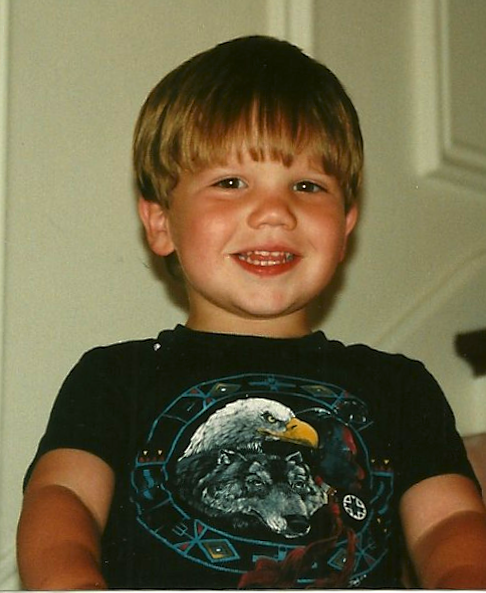
Exactly 10 months after Jeff’s passing, the Prides, the Fijals and some friends hosted the first fundraising event launching the Jeffrey Pride Foundation.
“That first event didn’t raise much money, but it lit a spark in all of us,” Phil says. “It was a moment for our community to gather and show the Pride family how much they are loved. My wife and I have been serving as president and secretary of the foundation from nearly its inception, and it’s been an exceptionally meaningful part of our lives.”
Now nearing their 25th year, the momentum has grown – exponentially. As of 2024, the Jeffrey Pride Foundation has gifted more than $5 million to the Children’s Oncology Group (COG) Foundation. And with each passing year, Phil stands alongside his fellow board members, the foundation’s auxiliary board and young professionals board, wholeheartedly emboldened by the progress physician researchers have made.
“The success we’ve seen with CAR T-cell therapies for blood cancers is what we want to see for other cancers. We need more funding for using tumor genetics to build better therapies based on the cancer’s DNA,” Phil says. “We’re so proud to be part of every project that we’ve supported. But we still lose too many kids and there’s not enough federal funding allocated to pediatric cancer. So we’re going to keep raising money for COG.”
As they researched where their gift would be most effective, Jeffrey’s doctors guided Jeffrey Pride Foundation leaders to the few organizations doing leading-edge pediatric cancer research. One of those was the Cure Search, an organization that supported the original collective of research groups that would eventually merge to become the Children’s Oncology Group.
“We had learned how much harm the chemotherapies could do to a child’s body and we wanted to be part of the solution,” Phil says.
Ultimately, they had two big questions. The first: Why hadn’t more effective treatments been developed? The second: Why were there still so many unanswered questions about what causes pediatric ALL?
“We quickly understood how much doctors and scientists wanted to study ALL and other childhood cancers from every angle,” Phil says. “They wanted to develop better treatments and understand what caused cancers to start. We were 100 percent aligned with that drive.”
Over the years, the Jeffrey Pride Foundation team has found creative ways to fundraise. They’ve held concerts and more golf tournaments. They’ve hosted black-tie dinners and beer tastings.
“The only constant at our events is the time we save to tell Jeffrey’s story and why we support COG. What started out as a way to remember Jeff, has grown so greatly because we realized there are so many more “Jeffs” out there.” Phil says. “We want everyone who gives to us to understand why COG is the place where giving has the greatest impact on pediatric cancer research. We’ve supported more than two dozen COG studies because we know that it is only through research that we will find a cure.”
As they prepare to mark the 25th anniversary of Jeffrey’s passing, a few projects stick out to Phil as being particularly meaningful. One is their multi-year gift to Project:EveryChild, the centralized biorepository that hosts all of the COG’s tumor, blood and tissue samples used for research.
Building the Project:EveryChild infrastructure has played a huge role in advancing studies for every type of pediatric cancer. Having all of that information in one place for researchers to access also increases shared learning – because knowledge about one cancer often applies to another.
They’ve also supported the COG’s two Integrated Translational Science Committees, which include one for solid tumors and one for blood cancers. COG’s translational research is vitally important – it’s the bridge between discoveries and new therapies. For example, when a new cancer-causing mutation or chromosome is discovered, scientists then start looking for ways to use medication against that mutation to stop the cancer at its source.
“Today, I can confidently tell our supporters that their dollars have played a significant role in developing better treatments that have increased survival rates and decreased long-term side effects,” Phil says. “One day, we’ll pass our foundation to the next generation of Jeffrey Pride Foundation leaders, many of whom sit on our auxiliary and young professional boards. These were his friends and classmates. I can’t wait to see how they continue to help other kids in honor of their childhood friend.”
In 2024, the foundation funded a series of leukemia and lymphoma studies. One is led by Thai Hoa Tran, M.D., a pediatric oncologist at Centre Hospitalier Universitaire Sainte-Justine in Montreal, Québec. (see sidebar)
Dr. Tran studies the rare type of leukemia Jeffrey had – Ph-like ALL – which mimics the gene signature of patients whose ALL expresses the Philadelphia chromosome but has some other unique characteristics that make it more difficult to diagnose and to treat.
“Dr. Tran’s trial brings me hope and the motivation to do more. I extend my gratitude to Dr. Tran and to all of the researchers at COG for their steadfast dedication to the families who experience this horrible disease,” Phil says.
Phil also acknowledges his gratitude for all COG donors, from everyone who has made gifts to honor a child they’ve lost to large foundations. He sees their foundation as one piece of the greater success that can be achieved by families and groups connected to pediatric cancer.
“Our entire foundation team wants everyone to maintain their motivation. We want you to tell your stories and the story of COG,” Phil says. “Share with everyone that there is still too little federal funding for pediatric cancer research and that individual communities have the power to meet the need.”
Learn more here opens in a new tab.
A study aimed at improving treatments for Ph+ and Ph-like ALL patients
By Thai Hoa Tran, MD opens in a new tab, pediatric oncology, Centre Hospitalier Universitaire Sainte-Justine in Montreal, Québec, Canada
In the initial COG study, blinatumomab worked so well and resulted in far less toxicity that the trial closed early.
In 2024, my colleagues and I, Lewis Silverman, M.D. at Columbia University Irving Medical Center and Sarah Tasian, M.D. at Children’s Hospital of Philadelphia, will launch a phase 3 clinical trial, incorporating blinatumomab in combination with dasatinib, a targeted therapy, into the treatment plan for patients with Ph+ or Ph-like ALL. As a randomized study, some patients would get the standard treatment and for others, blinatumomab plus dasatinib would replace some more intensive and toxic cycles of their chemotherapy.
Thankfully, the National Cancer Institute saw how important this study is for Ph+ and Ph-like patients and supported us in collaborating with the two largest pediatric ALL research groups in Europe. This is one of the few times the COG has been able to launch an international trial across both sides of the Atlantic Ocean – a big win for kids who don’t have time to wait.
With added funding from the Jeffrey Pride Foundation, we’re expanding the study into deeper genetic research on how patients respond or don’t respond to the combination of immunotherapy and targeted therapy.
Every day I’m in the clinic and get to spend time with my patients, I see the positive outcomes from research. I also see how much more there is to be done. I can’t thank donors like the Jeffrey Pride Foundation enough for providing us with the funding to help us study complex types of ALL.
With their annual gift to the Children’s Oncology Group, the Jeffrey Pride Foundation also supported Terzah Horton, M.D., Ph.D, at the Texas Children’s Cancer Center who is working on optimizing therapy selection and discovering new therapy targets for patients with B-cell ALL whose diagnosis is generally associated with poor outcomes. Lisa Giulino-Roth, M.D. at Weill Medical College of Cornell University is leading two projects. One is evaluating a novel drug to treat Primary Mediastinal B-cell lymphoma, a rare and aggressive cancer that most often occurs in adolescents and young adults. The second, to study immune checkpoint inhibitors, one of the most promising treatments for patients with Hodgkin lymphoma.