
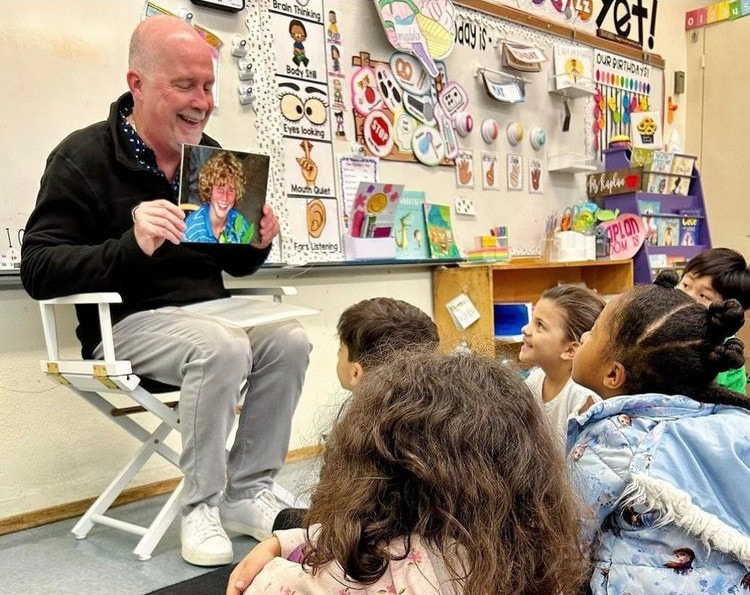
The Andrew McDonough B+ Foundation has supported the Children’s Oncology Group (COG) in so many ways over the years, it’s hard to know where to begin or how to quantify the positive impact it’s had on the world of childhood cancer research. It all started with an outstanding 14-year-old student-athlete with a mop of blond curls, a glowing smile, and a “be positive” attitude.
PHOTOS COURTESY OF THE B+ FOUNDATION
“The world is a little dimmer with Andrew not in it,” said his father, Joe McDonough, President of The B+ Foundation. “I’ve come to accept that. I can’t change that. What I can do is help other families and honor Andrew along the way.”
From hot dog sale to granting millions for cancer research
Initially headquartered out of the McDonoughs’ home in Delaware, the foundation’s first fundraiser was a hot dog sale at a regional department store.
Joe’s not selling hot dogs anymore. In 2024, The Andrew McDonough B+ Foundation raised nearly $12 million.
“With very few exceptions, there’s nothing that happens in childhood cancer research that COG isn’t involved in,” Joe said.
Since 2007, The B+ Foundation has raised tens of millions of dollars, awarding more than 250 grants supporting research on a broad array of childhood cancers and promising treatments like immunotherapy, which harnesses a patient’s own immune system to destroy cancer cells.
Funding ideas with potential for big impact
The B+ Foundation has backed some COG’s most important initiatives, including Project:EveryChild opens in a new tab, a “biobank” of blood and tissue samples from tens of thousands of kids. Scientists from all over the world use specimens from Project:EveryChild to move research forward.
ctDNA in the blood can give doctors precise, real-time data about whether a patient’s treatment is working, so it can be dialed up, scaled back, or switched out for a different drug.
The B+ Foundation directs many of its funds to improving care and outcomes, but they also support other important aspects of research, like data science and survivorship. When first approached about supporting COG’s Statistics and Data Center, Joe wasn’t sure it fit the foundation’s focus on cutting-edge, collaborative research.
Then he learned what key players biostatisticians are in all of COG’s research, and how they make vital contributions to the initial design of a study, data monitoring, and analyzing outcomes.
“When your child is first diagnosed with cancer, you’re probably not thinking about fertility preservation — especially when they’re little,” Joe said. “You’re worried your child is going to die.”
Many children who survive cancer become infertile as a result of chemotherapy or radiation. When Joe learned that technology exists to preserve children’s fertility — even those who haven’t gone through puberty yet — he saw an opportunity to help young cancer survivors lead happy and fulfilling lives as they grow up.
The Andrew McDonough B+ Foundation Fertility Preservation Program opens in a new tab at Nemours Children’s Health in Wilmington, Delaware, talks to kids, teens, and their families about the risks and benefits of options like freezing eggs or ovarian tissue, sperm or testicular tissue, or moving ovaries away from radiation. The program covers the costs of preservation to lessen the burden for families.
The foundation also supports programs that help siblings deal with the psychosocial strains of adapting to their brother or sister’s diagnosis. It leads advocacy efforts to raise awareness and funding for childhood cancer research. And it’s become the largest provider of financial assistance to families of kids with cancer in the United States, supporting nearly 4,000 families in 2024 alone.
Joe regularly attends COG conferences to stay up-to-date on promising research opportunities. Over the years, he’s also learned a lot from Dr. Peter Adamson, MD opens in a new tab, COG Chair from 2011 to 2020, about trends in cancer research and obstacles scientists often face as they try to make research happen.
“Peter once shared a concern that we could lose brilliant young investigators if we don’t do everything we can to make it attractive for them to dedicate their lives to pediatric oncology versus another specialty,” Joe said.
“We have brilliant doctors, brilliant investigators,” Joe said. “It’s in our best interest that they’re able to focus on that work rather than fundraising. We need to keep them focused on what they do best.”
Joe regularly turns to Dr. Adamson, COG Chair Dr. Doug Hawkins, MD opens in a new tab, and other members of The B+ Foundation’s Scientific Advisory Board for guidance on the best opportunities to propel research forward. And he jumps at every chance to encourage others to support COG.